Toxic Workplace Environment: Recognizing the Signs and Protecting Your Mental Health

A toxic workplace environment is more than a job that feels stressful or demanding. While all workplaces come with pressure and occasional conflict, toxicity involves persistent patterns of behavior that undermine psychological safety, respect, and stability. Over time, these patterns can quietly erode confidence, increase anxiety, and create a chronic sense of emotional exhaustion.
As a therapist, I often work with clients who initially describe their workplace as simply “intense” or “competitive.” But as we explore their experiences more deeply, it becomes clear that the issue is not just workload—it is the emotional climate. Understanding what defines an unhealthy work culture and how it affects mental health is the first step toward protecting yourself.
What Defines a Toxic Workplace Environment?
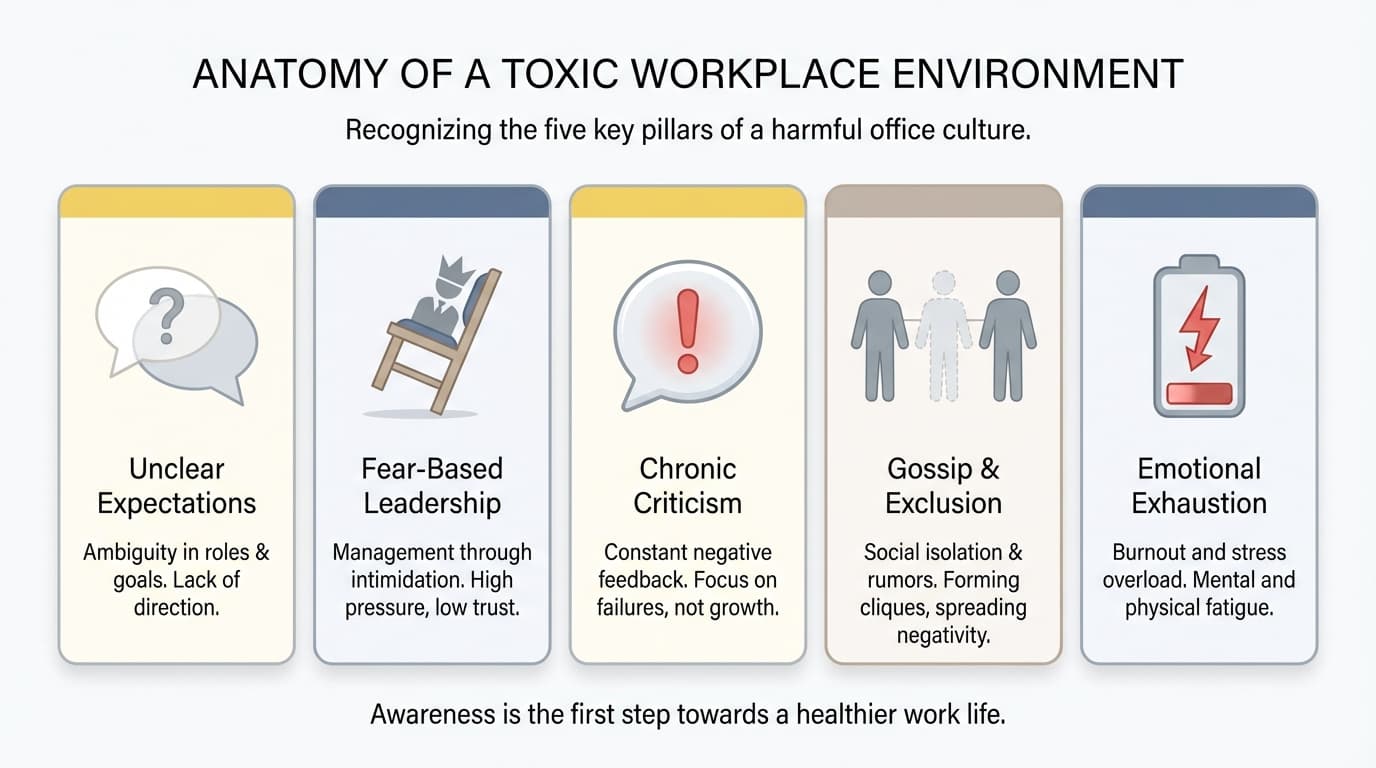
A dysfunctional work setting is typically marked by ongoing behaviors that create fear, instability, or disrespect. This may include constant criticism, favoritism, manipulation, gossip, unrealistic expectations, poor communication, or unclear boundaries. In some organizations, these behaviors are normalized or even rewarded under the guise of “high standards.”
Unlike temporary stress, toxicity tends to be repetitive and systemic. Employees may feel they must constantly prove themselves, manage other people’s moods, or remain silent to avoid becoming targets. Over time, this type of atmosphere shifts from being simply challenging to emotionally draining.
The key distinction is consistency. When harmful patterns continue without accountability or change, the emotional cost accumulates. In many cases, people do not recognize they are in a toxic work environment until symptoms such as anxiety, sleep disruption, or burnout begin to surface.
The Emotional Toll of Workplace Toxicity
Spending most of your waking hours in an unhealthy professional environment inevitably affects your emotional well-being. Many individuals report increased anxiety, irritability, mental fatigue, and disrupted sleep. Others describe feeling detached, unmotivated, or persistently on edge.
A workplace defined by chronic negativity can also distort self-perception. Capable professionals may begin to question their competence or worth, especially when feedback is inconsistent or predominantly negative. Over time, this self-doubt can deepen into burnout, depression, or a sense of professional disillusionment.
It is important to recognize that these reactions are not signs of weakness. They are understandable responses to chronic stress and emotional unpredictability.
Leadership and Its Influence
Leadership plays a central role in shaping workplace culture. In many cases, dysfunction originates from management styles that rely on intimidation, inconsistency, or public criticism. Working under a toxic boss can intensify stress because employees may feel powerless to challenge authority.
A manager who frequently shifts expectations, withholds information, or takes credit for others’ work creates an atmosphere of instability. Even when coworkers are supportive, leadership-driven dysfunction can keep employees in a constant state of tension.
Understanding how leadership behavior contributes to workplace culture can help individuals separate personal self-worth from systemic dysfunction.
When Bias or Exclusion Is Present
In some cases, toxicity extends beyond poor management and includes discrimination or exclusion. Experiences of discrimination in the workplace—whether subtle or overt—can significantly intensify emotional distress.
Microaggressions, unequal opportunities, or dismissive treatment based on identity compound the stress of an already unstable environment. When bias is present, employees may hesitate to speak up out of fear of retaliation or further marginalization.
It is essential to acknowledge that discrimination is not a misunderstanding or oversensitivity—it is a structural issue that deserves serious attention and support.
Why It Can Be Hard to Leave
Many people remain in a harmful workplace longer than they intend to. Financial obligations, career trajectory, visa status, or professional reputation can all make leaving feel risky. There may also be hope that conditions will improve.
Employees often tell themselves the situation is temporary or that if they just work harder, dynamics will shift. Unfortunately, without meaningful cultural or leadership change, entrenched dysfunction rarely resolves on its own.
Recognizing when an environment consistently mirrors a toxic workplace environment allows you to evaluate your options more clearly—whether that means strengthening boundaries, seeking internal allies, or exploring new opportunities.

Protecting Your Mental Health
Although you may not be able to control workplace culture, you can take steps to protect your well-being within it. Establishing emotional boundaries is crucial. This might include limiting involvement in gossip, documenting communication, or choosing not to internalize unfair criticism.
It can also help to identify what is within your control and what is not. While you cannot change another person’s behavior, you can decide how much access they have to your emotional energy. Practicing stress regulation techniques outside of work—such as exercise, structured downtime, or mindfulness—can support nervous system recovery.
External support is equally important. Talking with trusted friends, mentors, or a therapist can provide perspective and validation. Therapy offers a structured space to process experiences and separate external dysfunction from internal identity.
Rebuilding Confidence After Harmful Work Experiences
One of the most lasting effects of a toxic workplace environment is diminished confidence. After months or years of instability, individuals may second-guess their instincts or hesitate to trust their judgment in future roles.
Recovery involves rebuilding trust in yourself. This often includes examining internalized narratives such as “I’m not capable” or “I should have handled it better.” With support, these beliefs can be reframed in context.
Over time, confidence returns—not because the past didn’t happen, but because it no longer defines your sense of self. Growth after workplace harm is possible, especially when experiences are processed rather than minimized.
Final Thoughts
Workplace dysfunction can have profound effects on emotional health, confidence, and long-term well-being. Recognizing the warning signs early allows you to respond intentionally rather than simply endure.
If you are feeling drained, anxious, or uncertain about your work environment, therapy can provide a supportive space to explore what you’re experiencing and clarify your next steps. You deserve to work in a setting that supports both your professional growth and your mental health. If you’re ready to talk about what’s been weighing on you, I invite you to reach out and begin the conversation.