Time Management Strategies: Therapist-Backed Tools for a Calmer, More Productive Life

Feeling overwhelmed, stretched thin, or constantly behind on tasks is more common than most people admit. Daily responsibilities pile up quickly, and without supportive time management strategies, stress can escalate into burnout, anxiety, or chronic exhaustion. As a therapist, I often see how small adjustments in how people structure their days create profound improvements in emotional well-being, self-confidence, and overall life satisfaction.
Time management isn’t about squeezing productivity into every minute — it’s about protecting your energy, reducing decision fatigue, and creating space for rest, relationships, and personal goals.
Why Time Feels Hard to Manage
Many people struggle with time not because they’re disorganized, but because emotional factors get in the way:
- fear of failure
- difficulty saying no
- perfectionism
- overwhelm
- lack of clarity about priorities
- unpredictable workplace demands
Learning why time feels unmanageable is just as important as learning what to do about it. Exploring why time management is important reveals how structure supports both mental health and long-term success.
This awareness becomes the foundation for choosing time management strategies that genuinely fit your life.
Strategy 1: Prioritize Your Tasks With Intention
Not everything deserves equal attention or urgency. Instead of jumping into the longest or most draining task, prioritize by:
- importance
- deadlines
- emotional weight
- energy level required
Try categorizing your to-do list into “Must Do,” “Nice to Do,” and “Can Wait.” This method reduces overwhelm and helps you make choices based on impact, not pressure.
Strategy 2: Break Big Tasks Into Smaller Steps
Large tasks often trigger avoidance because they feel impossible to start. Breaking them into small, 10-minute steps creates movement without stress. For example, instead of “Finish presentation,” start with:
- brainstorm three ideas
- outline slides
- draft the intro
This creates psychological momentum and helps your brain register progress.
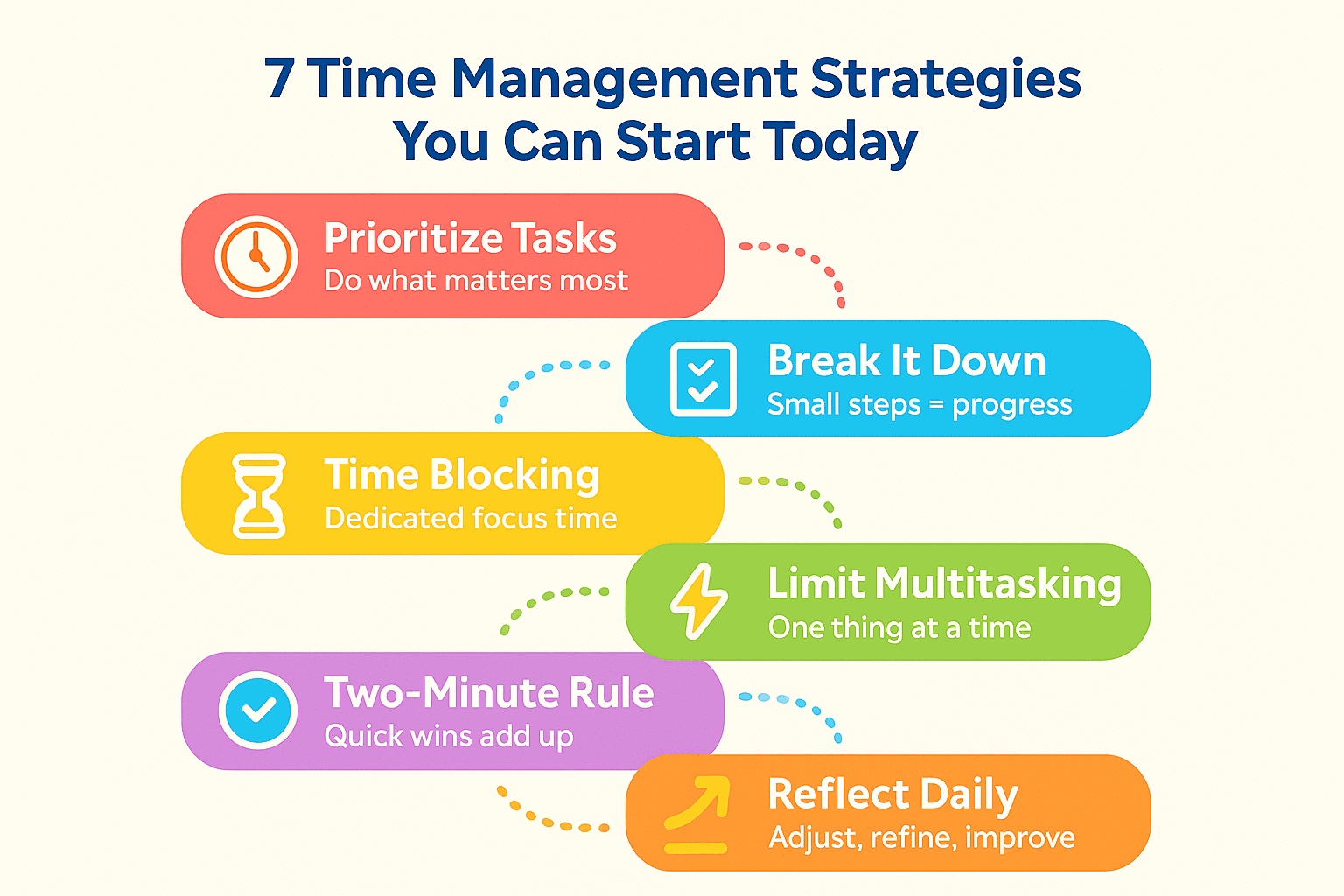
Strategy 3: Use Time Blocking to Create Mental Boundaries
Time blocking is one of the most effective time management strategies for people who juggle multiple responsibilities. By assigning a specific time window to a task or category of tasks, you reduce the mental load of deciding “what to do next” throughout the day.
Blocks can include:
- focused work time
- admin tasks
- breaks
- checking email
- personal time
This structure mirrors the habits often seen in people with strong leadership qualities — many of the qualities of a good manager involve planning, clarity, consistency, and healthy boundaries.
Strategy 4: Limit Multitasking
Despite its reputation, multitasking actually increases stress and decreases efficiency. Switching between tasks causes your brain to restart mentally, which drains energy.
Instead of doing three things at once, give full attention to one task at a time. You’ll finish faster, with fewer errors, and with more emotional ease.
Strategy 5: Use the Two-Minute Rule
If a task takes two minutes or less — reply to an email, schedule an appointment, tidy a small area — do it immediately. This prevents small responsibilities from accumulating into overwhelming piles that consume your mental space.
Strategy 6: Build Rest Into Your Schedule
A schedule without rest is not time management — it’s self-neglect. Breaks give the brain space to recover, integrate information, and maintain emotional balance.
Rest can take many forms:
- a 10-minute walk
- stretching
- breathing exercises
- listening to music
- stepping outside for sunlight
Short, intentional pauses throughout the day strengthen resilience and reduce burnout.

Strategy 7: Set Boundaries Around Your Availability
Many people lose track of their time because they allow constant interruptions — texts, notifications, requests, or last-minute tasks from others. Setting clear boundaries helps protect your focus and emotional energy.
Examples include:
- turning off non-essential notifications
- creating “do not disturb” work periods
- saying “I can get to that tomorrow”
- finishing work at a consistent time
Protecting your time is an act of self-respect.
Strategy 8: Reflect on What’s Working (and What Isn’t)
Time management is most effective when you check in with yourself regularly. Ask yourself:
- What felt too rushed today?
- Where did I lose time?
- What helped me stay calm?
- What can I simplify tomorrow?
Reflection allows you to refine your approach so your schedule works for your mental health — not against it.
Creating a Healthier Relationship With Time
When you use supportive time management strategies, you don’t just become more organized — you become more emotionally grounded. You gain clarity, protect your energy, and create space for what truly matters. These tools help you feel more in control, more present, and more connected to your values.
If you find yourself overwhelmed, stuck in procrastination, or struggling to balance work and personal life, therapy can help you uncover the emotional patterns behind your time challenges and build a schedule that works with your nervous system, not against it. Reach out today to begin creating a healthier, more intentional rhythm for your life.