How Do I Improve My Corporate Communication Skills in High-Pressure U.S. Workplaces?

Living and working in New York often means navigating fast-paced, high-expectation corporate environments. For many Asian Americans and Asian immigrants, professional communication can feel especially complex due to cultural norms around respect, hierarchy, and emotional restraint. If you’ve ever asked yourself “how do I improve my corporate communication skills,” you’re not alone—and the answer often involves far more than learning the “right words” to say.
As a therapist working with Asian professionals in NYC, I frequently hear concerns about being misunderstood, overlooked, or perceived as “too quiet” or “too direct.” Some clients worry they are not assertive enough, while others fear they may come across as rude or inappropriate if they speak too openly. These challenges are rarely about intelligence or competence. More often, they stem from cultural differences in communication styles, power dynamics, and unspoken workplace expectations that can feel confusing or even contradictory.
Cultural Context Matters in Corporate Communication
Many Asian cultures emphasize humility, harmony, and indirect communication. Respect is often shown by listening carefully, avoiding conflict, and allowing authority figures to lead. These values are strengths, especially in building trust and long-term relationships. However, they can sometimes clash with U.S. corporate norms that prioritize self-promotion, quick responses, and speaking confidently—even before ideas feel fully formed.
For example, speaking up in meetings may feel uncomfortable if you were taught that deference shows respect or that interrupting is inappropriate. In American corporate settings, however, silence is often misinterpreted as disengagement or lack of initiative. This mismatch can lead to frustration on both sides. Improving communication doesn’t mean abandoning your cultural values; it means learning how to express them in ways that are recognized and respected in your specific workplace environment.
How Do I Improve My Corporate Communication Skills in a U.S. Workplace?
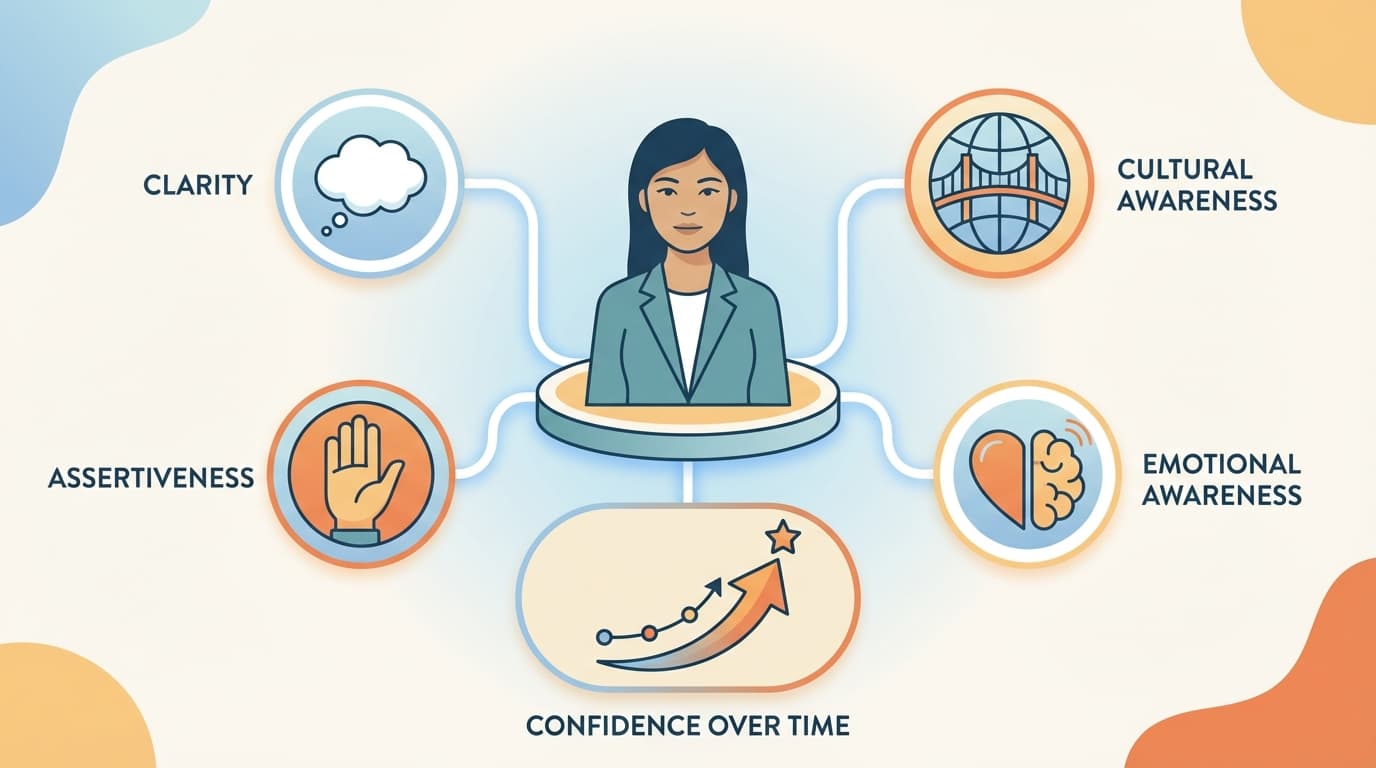
One of the most helpful shifts is moving away from perfection and toward clarity. Many Asian immigrants place immense pressure on themselves to speak flawlessly, especially if English is not their first language. In reality, clarity and presence matter far more than perfect grammar or accent.
Becoming more explicit in your communication can make a significant difference. This might mean stating your opinion clearly rather than implying it, asking follow-up questions to show engagement, or briefly summarizing your ideas so others can recognize your contribution. These small adjustments help make your work visible without requiring you to change who you are.
Understanding business etiquette in U.S. corporate culture can also reduce anxiety. This includes knowing when it’s appropriate to speak up, how to disagree respectfully, and how to navigate hierarchy without feeling disrespectful or self-betraying. When expectations become clearer, communication often feels less risky and more manageable.
Managing Accent Anxiety and Self-Doubt
Many Asian immigrants carry deep anxiety about their accent or word choice. Even highly skilled professionals may worry that they sound “unprofessional” or fear being judged as less competent. Over time, this fear can lead to over-preparing, avoiding speaking opportunities, or mentally rehearsing every sentence before saying it out loud.
These patterns are understandable, especially for those who have experienced subtle bias or past criticism. However, they can quietly erode confidence and increase stress. Rather than focusing on sounding “perfect,” it is often more helpful to focus on being understood. Speaking a little more slowly, organizing thoughts into simple points, and using structure can make communication more effective than flawless language ever could.
Learning “how do I improve my corporate communication skills” often involves unlearning internalized beliefs that equate worth with linguistic perfection or constant self-monitoring.
Assertiveness Without Losing Yourself
Assertiveness is frequently misunderstood as being aggressive, confrontational, or overly dominant. In reality, assertiveness is about expressing your needs, ideas, and boundaries clearly while maintaining respect—for yourself and others.
For Asian professionals, assertiveness can be practiced in culturally aligned ways. Calm tone, thoughtful wording, and intentional timing can all support clear communication without feeling abrasive. For example, instead of interrupting during a meeting, you might say, “I’d like to add one point to what was just discussed,” or “Can I offer another perspective?” These phrases maintain politeness while ensuring your voice is included.
Assertiveness is a skill, not a personality trait. It can be learned gradually, especially when practiced in environments that feel emotionally safe.
Emotional Awareness and Communication
Communication is not just verbal—it is emotional. Stress, anxiety, and past experiences all influence how we speak, listen, and respond. Many high-achieving Asian professionals carry pressure to avoid mistakes, not disappoint authority figures, or represent their community well. This pressure can heighten self-monitoring and reduce spontaneity in conversation.
Therapeutic work often focuses on increasing emotional safety so that speaking up no longer feels dangerous. When the nervous system feels calmer, communication becomes clearer and more natural. Emotional awareness also helps reduce the mental exhaustion that comes from constantly second-guessing oneself in professional settings.

Strengthening Corporate Communication Through Practice and Awareness
Improvement happens gradually and through reflection. Consider noticing patterns in your work life: When do you feel most confident speaking? When do you hold back? Are there certain people or situations that trigger self-doubt?
These observations provide valuable guidance. Growth often involves a combination of exposure, feedback, and self-compassion. Working toward effective communication in the workplace means balancing practical skill-building with emotional awareness, especially for those navigating cultural adaptation alongside professional growth.
The Role of Therapy in Professional Growth
Therapy can provide a culturally attuned space to explore communication challenges without judgment. For Asian Americans and immigrants, this space is especially valuable for unpacking cultural expectations, internalized pressure, and workplace stress that may not be openly discussed elsewhere.
Clients often discover that as confidence grows internally, external communication improves naturally. Therapy does not teach scripts or force personality changes—it helps you speak from a grounded, self-trusting place.
Moving Forward With Confidence
If you’re still wondering “how do I improve my corporate communication skills”, remember that growth does not require becoming someone else. It involves expanding your range while staying connected to who you are.
Corporate communication is not just about performance—it’s about belonging, being heard, and feeling respected. With the right support, it is possible to navigate New York’s demanding professional landscape while honoring both your cultural identity and your personal well-being.
If workplace communication has been causing stress, self-doubt, or exhaustion, therapy can help you explore these challenges and build confidence at your own pace. If you’re ready to talk about what’s been holding you back at work, I invite you to reach out and start a conversation. Support is available, and you don’t have to figure this out on your own.